
Natural Hydrogen vs. Manufactured Hydrogen 

For decades, hydrogen has been manufactured for commercial use. Natural hydrogen offers a new path. Already formed underground, it has the potential to reshape cost, infrastructure, and carbon outcomes at scale. 
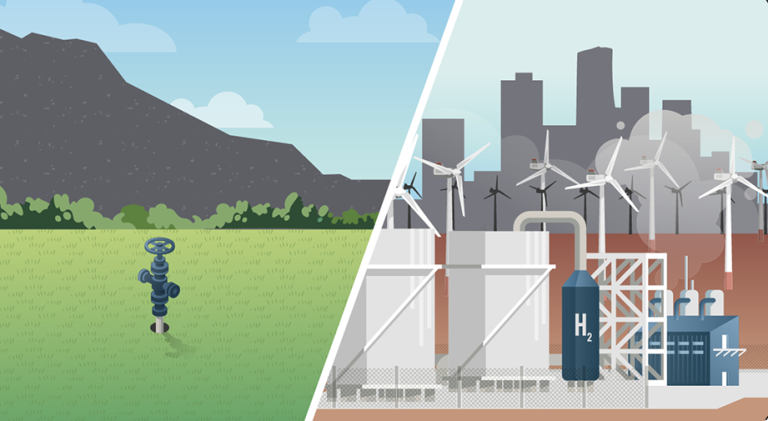
Diagram showing differences between natural hydrogen vs. Manufactured hydrogen 
Scientist performing test in a lab

What Is the Difference Between Natural Hydrogen and Manufactured Hydrogen? 

Manufactured hydrogen begins with production: How do you create hydrogen from another input? Natural hydrogen begins with discovery: Where does hydrogen already exist, and what would it take to access it responsibly?

In simple terms, manufactured hydrogen is produced through industrial processes such as electrolysis, reforming, or gasification. Natural hydrogen is a primary energy source, meaning the hydrogen forms through natural geologic processes rather than being manufactured from another input. That means the distinction is not about the hydrogen molecule itself. It is about what has to happen before that molecule becomes available. 

Manufactured hydrogen is made. Natural hydrogen is found. 

What Counts as Manufactured Hydrogen? 

Manufactured hydrogen is not one process. It spans methods from natural gas reforming and gasification to electrolysis, methane pyrolysis, solar-driven production, and biological production. Inputs vary, but each pathway depends on a process to create the hydrogen molecule.

Color labels (like green or blue hydrogen) can be useful shorthand, but they’re often inconsistent or incomplete. Production method is clearer because it shows each pathway’s inputs, infrastructure needs, cost exposure, emissions profile, and path to scale.

How Manufactured Hydrogen Is Made 

Natural Gas Reforming 

Uses natural gas, heat, and chemical reactions to produce hydrogen. Often called gray hydrogen without carbon capture, or blue hydrogen when paired with carbon capture. 

Electrolysis 

Uses electricity to split water into hydrogen and oxygen. Often called green hydrogen when powered by renewable electricity. 

Gasification

Uses coal, biomass, or other carbon-based feedstocks to produce hydrogen-rich gas. Emissions depend on the feedstock, process, and whether carbon capture is used. 

Methane Pyrolysis 

Uses methane or natural gas to produce hydrogen and solid carbon. Often called turquoise hydrogen. 

Other Emerging Methods 

Includes solar-driven, biological, thermochemical, and other developing production approaches. 

The Gap Manufactured Hydrogen Hasn’t Closed 

Manufactured hydrogen has long faced a difficult balance. Conventional production methods can be cost-effective, but they are also carbon-intensive. That matters as industries, countries, and energy buyers work toward emissions targets, regulatory requirements, and long-term decarbonization commitments.

Lower-carbon production methods can reduce emissions, but they often add complexity through more electricity, more equipment, more infrastructure, more carbon management, and greater exposure to input costs. That matters, too. If clean hydrogen is too expensive to produce or too difficult to scale, it will create cost pressure for the industries that need it and, ultimately, the customers and communities they serve.

Natural hydrogen changes that equation. It offers what the hydrogen market has been trying to solve for: low-carbon potential without the same production and cost burdens. 

Natural Hydrogen Can Reduce the Core Hydrogen Tradeoff

Most hydrogen pathways involve a tradeoff. Natural hydrogen has the potential to offer both.

Ven diagram of natural-hydrogen
Natural hydrogen closes the gap between what is clean enough to meet emissions goals and cost-effective enough to scale. 

How Natural Hydrogen Closes the Gap 

Illustration dollar green grass image 6

Cost that can work
in the real world 

By avoiding the need to manufacture the molecule, natural hydrogen changes the cost equation for scaling clean hydrogen.  

Illustration c02 recycling green grass image 6

Low carbon from the start 

Because it forms underground, natural hydrogen is positioned to be one of the lowest-carbon hydrogen options available. 

Illustration showing a faucet valve connected to a hydrogen tank

A lighter path to development 

Natural hydrogen can shift development away from permanent production facilities and toward responsible exploration and well access. 

Together, these differences point to how natural hydrogen offers a more direct route to low-carbon hydrogen at scale.

How Natural Hydrogen Changes Hydrogen Economics

For manufactured hydrogen, cost is often tied to what it takes to make the molecule.

Electrolytic hydrogen, for example, depends heavily on electricity prices, electrolyzer costs, water supply, and facility buildout. Hydrogen made from natural gas can be lower cost, but emissions and carbon capture requirements can change the economics. Other production methods may bring their own feedstock, technology, infrastructure, and scale challenges.

Natural hydrogen has a different cost thesis. If it’s present underground, there’s no need to build and power a system to produce it from another input. Investment is still needed to find, access, process, and transport the resource, but the absence of a manufacturing step creates major cost saving opportunities compared with other low-carbon hydrogen options.

That is why natural hydrogen is especially promising for industries that need clean energy at practical cost. Hydrogen cannot scale if it only works on paper. To matter in the real economy, it has to be both clean enough to meet emissions goals and cost-effective enough for energy buyers, industries, and communities to use. 

Manufactured hydrogen cost chain:

1. Input energy/ feedstock

2. Production equipment

3. Facility buildout

4. Emissions management

5. Storage/ transport

VS.
Natural hydrogen cost chain:

1. Find the resource

2. Access the resource

3. Process/transport

Why Natural Hydrogen Has Strong Low-Carbon Potential 

Manufactured hydrogen can be low carbon, but only when the way it is produced is also low carbon. Electrolysis can produce hydrogen with very low emissions when powered by non-emitting electricity. Reforming can reduce emissions when paired with carbon capture. But in each case, the method still has to account for the energy source, feedstock, facility, emissions controls, processing, and transport.

Natural hydrogen’s advantage is not that it has no footprint. It is that the energy-intensive step of manufacturing is not required. For industries and countries working toward lower emissions, that makes natural hydrogen a more direct way to access low-carbon hydrogen at meaningful scale.

Drilling rig in bright yellow field

The Different Infrastructure and Land Needs for Natural Hydrogen 

Manufactured hydrogen requires infrastructure designed to create hydrogen: electrolyzers, reformers, gasifiers, power supply, feedstock supply, production facilities, storage, transport, and in some cases carbon capture infrastructure. Much of that infrastructure is permanent because the molecule must continue to be manufactured. 

Natural hydrogen requires infrastructure designed to find and access hydrogen: geologic research, geophysical surveys, wells, evaluation, processing, transport, and responsible operations. That infrastructure still matters, but it is different in purpose, complexity, and footprint. Most importantly, it does not require a permanent industrial facility to create hydrogen. Where viable accumulations are found, development focuses on responsible exploration and well access rather than building and operating a large production facility.

This matters because infrastructure is not only a cost question. It is also a land, community, speed-to-development, and long-term footprint question. A smaller operating footprint makes natural hydrogen especially compelling in places where low-carbon energy needs to scale without adding large permanent production facilities. 

Natural Hydrogen vs. Manufactured Hydrogen Land Use

Illlustration drill pad with mountains img
Natural hydrogen sites use about five acres for initial exploration and drilling. That can narrow to as little as one acre once the well is operating. If laboratory results do not indicate the potential for commercial quantities of natural hydrogen, the land is restored to the condition it was in before exploration.
Illustration portraying manufacturing with renewable energy sources

Manufactured hydrogen sites vary by method and scale, and often have a larger, more permanent industrial footprint. Standalone facilities may require roughly 10 to 100+ acres. Larger projects can reach hundreds or thousands of acres with storage, carbon capture, ammonia production, renewable power, or utility infrastructure.

Green pine against a clea blue sky

The Most Direct Route to Low-Carbon Hydrogen 

The hydrogen market needs options that can lower emissions without making energy harder or more expensive to access. Manufactured low-carbon hydrogen can play a role, but scaling it often means scaling the systems that make it, like clean electricity, electrolyzers, reformers, carbon capture, feedstock supply, water access, production facilities, and transport.

Natural hydrogen offers a new model. Where viable accumulations are found, it provides low-carbon hydrogen with less production infrastructure, less exposure to input prices, and stronger cost potential. That’s why natural hydrogen is the most compelling opportunity in the future hydrogen landscape. It’s not just another way to make hydrogen; it’s a way to access hydrogen the earth has already made. 

What to Read Next  

Diagram showing split screen difference of natural hydrogen vs. Green hydrogen

Natural Hydrogen vs. Green Hydrogen

Read Now
Illustration portraying how natural hydrogen forms in the geology deep under the surface of the earth

What is Natural Hydrogen?

Read Now

FAQs

Is natural hydrogen manufactured? 

No. Natural hydrogen forms underground through geologic processes and is accessed through exploration and production rather than manufactured in an industrial facility.

Yes. Green hydrogen is manufactured through electrolysis, typically using renewable electricity to split water into hydrogen and oxygen.

Manufactured hydrogen is hydrogen produced from another input, such as water, natural gas, coal, biomass, or other feedstocks, using an industrial production process.

Major production methods include electrolysis, natural gas reforming, gasification, and other emerging approaches such as solar-driven, biological, thermochemical, and pyrolysis-based methods. 

Natural hydrogen has lower-cost potential because it does not need to be manufactured from another input. That can remove major cost categories associated with many hydrogen production pathways, including production equipment, energy, feedstocks, facility buildout, and emissions-management systems. Exploration, access, processing, and transport still require investment, but natural hydrogen does not carry the same production burden as hydrogen that has to be made from scratch.

Natural hydrogen can be lower carbon because it forms naturally underground rather than through an energy-intensive industrial production system. That removes a major source of emissions from the hydrogen equation: manufacturing.

Its full carbon intensity depends on exploration, access, processing, transport, and use, but natural hydrogen starts from a fundamentally different emissions profile than hydrogen that has to be made from another input.